"Nine-steam-nine-dry" — 九蒸九晒 — is usually treated as a brand name. It is a schedule. The root is steamed, then dried in sunlight, and the pair of steps is repeated. Nine is the traditional count, not a fixed chemical requirement: some workshops stop at five, some go to twelve. What matters is that the cycle is repeated until the root has taken on the colour and texture the process is meant to produce.
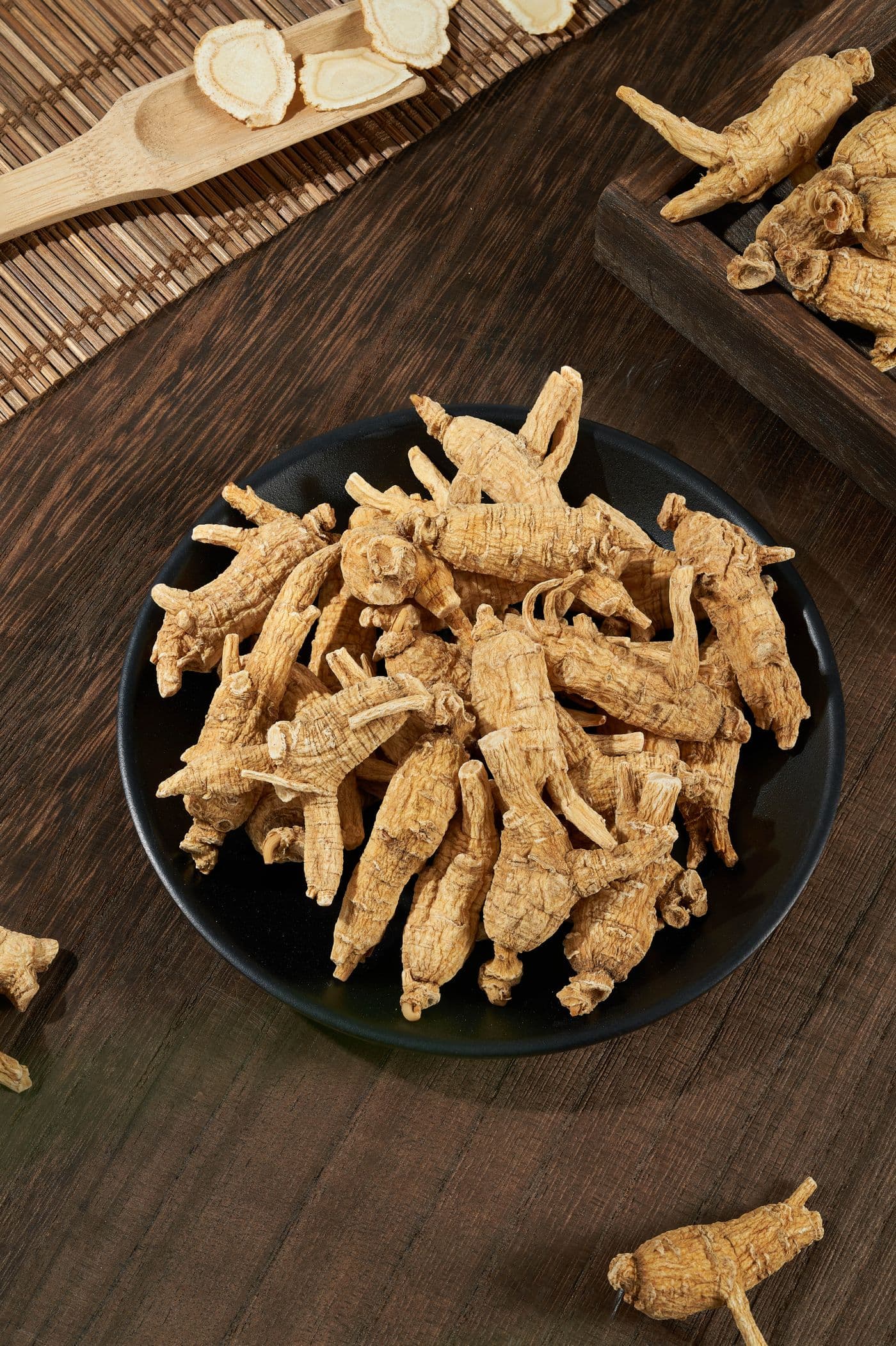
The raw root is first washed and sliced. Fresh Polygonatum sibiricum is pale, crisp and slightly acrid, and it darkens through the cycles — from cream, through amber, to a near-black. That colour is the practical indicator a workshop watches: it is the visible result of the Maillard-type browning and the caramelisation of the root's own sugars as it is repeatedly heated and dried.
Our current schedule is a steam at just under 100 °C for six hours, followed by a full day on the drying racks. Each round is a day and a half, and the nine rounds take a little over two weeks, weather permitting. Sun-dried rounds read as drier than the shaded alternative, which is why the schedule slips in a wet October.
Between rounds the material is turned and inspected. A slice that has not dried evenly through the middle goes back into the next round; this is the point of doing the process in slow cycles rather than once, and it is what a short cut removes.
Nothing is added at any stage. The colour, the softer texture and the change in aroma come from the root and the repeated heat alone.
We describe what the material is and how it was handled. We make no health claim of any kind.
Comments (0)
No comments yet. Be the first to leave one.